Posts

Showing posts with the label seokim

Translation: Making a Makgeolli Starter

Image
The translation section has been updated with a recipe for making a makgeolli starter. The starter can be used to get your brew started off on the right foot, with a healthy, active colony of hungry yeast and a dose of enzymes. I've found this recipe to be very useful, and I go back to it from time to time when starting a fresh batch of makgeolli. It is also very easy to modify to your needs, and can be scaled without much difficulty. The recipe can be found here , or by using the navigation. Happy brewing!
Grape Makgeolli 포도 막걸리

Image
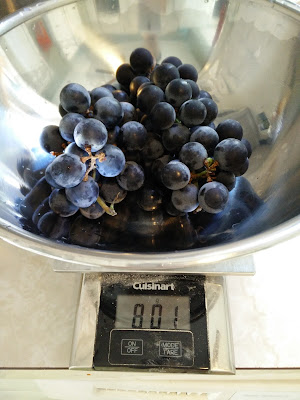
I'm not a grape expert , but I know that Korean grapes are delicious. They have thick, deep purple skins with a characteristic grape aroma. The taste is floral and reminiscent of grape candy, but with all the freshness of real fruit. ~700 grams when stems are removed So when I picked up my latest book on makgeolli brewing a few months back, I knew that I had to try this recipe. This is the first brew in my brewing schedule, which is a list of my planned brews and recipes. Grape Makgeolli 포도 막걸리 This recipe uses a seokim starter that was previously discussed here . The starter establishes a yeast colony ahead of time, so this is technically a two-stage fermentation; however, the seokim is a rather small amount so it does not feel like an iyangju or samyangju. Seokim after ~2 days Ingredients Sweet rice - 1 kg Nuruk - 100 g Grapes - ~700 g Seokim - 250 ml Water - 1.5 l I bought the grapes from my local H-Mart and washed them in vinegar and water. They...

Green Tea Makgeolli 녹차 막걸리

Image
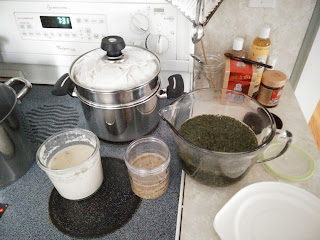
I'm starting my journey into infusing different ingredients during the brewing process. This move in inspired by a new book I picked up 술 만들기, and a recent delivery of ingredients from the in-laws. I'll post more info on those ingredients soon, but for today... Green Tea Makgeolli  녹차 막걸리 For this brew I used a starter instead of pitching yeast in with the rice and nuruk. The starter is called seokim (석임) and was introduced in a previous post here . I'll explain how to make seokim below using the ratio from the previous post.  The green tea used was a gift from my aunt, a delicious Jeju green tea blend. I've been enjoying the tea itself for some time now and thought it would be a good compliment to this recipe.  Here's what you'll need: For the seokim 석임 starter 250g rice flour 50g nuruk 2.5g wine yeast 25g wheat flour  300~400ml water (boiled) In a large bowl, mix the rice flour with the boiling water. Add a little bit of water a...

Makgeolli Starter (석임) Testing

Image
석임 For the upcoming brew I decided to do something a little different. Usually I steam the rice, making godubap 고두밥, and to that I add nuruk 누룩, yeast, and water. This is normal for me and it's what I've been doing for years (except for that year in Korea when I didn't use yeast). This time I will use what is called seokim 석임 . What's seokim? Seokim is a starter that can be used to brew makgeolli. It's started a few days ahead of the actual brew, and is added to the primary fermentation ingredients in place of yeast. What's seokim made of? It's actually pretty simple. Seokim uses all of the same ingredients as a makgeolli brew, just in a smaller size and different ratio. For example, the seokim recipe I used calls for 250g rice flour, 50g nuruk, 2-3g wine yeast, 25g whole wheat flour, and about 500ml water. Freshly made seokim Using seokim the brew hits the ground running, powered by yeast that are primed and ready to go....