Posts

Showing posts with the label 항아리

Nuruk Comparison

Image
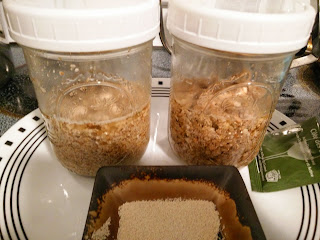
Currently brewing is a comparison between two brands of nuruk: a "market" nuruk purchased stateside and an artisan nuruk produced in Busan. Initial notes on the nuruk itself: To review, nuruk is the fermentation starter used for makgeolli and other kinds of traditional Korean beverages. It consists of fermented grains or rice and is home to a diverse set of micro-organisms. The "market" nuruk was purchased at H-Mart in the US under the brand Haeoreum. It has a pungent earthy aroma that is somewhat tangy on the nose. I would definitely describe the smell as moldy, but not foul or rank. It does not smell like decomposition. You may even describe the smell as reminiscent of a cellar or attic, but remember: no two smell alike. It definitely has an older scent than the Busan nuruk. The Busan nuruk was acquired from a friend, and I don't think it is available to purchase in the US. The aroma is a combination of earthy and woody, but neutral. There is n...
Dual Brew: Added Yeast | 100% Nuruk

Image
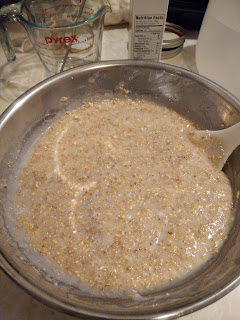
I haven't posted in a while, but a lot of good things have been happening. I've been doing a lot of travel for work, and talking to some wonderful people from the makgeolli brewing community in Korea. As part of those discussions the following two brews came about: An Iyangju using added yeast, and a Danyangju using nuruk only. Both brews used 100% sweet rice and a sweet rice starter. I'll explain each one below. The starter. The starter used is a bit of a trade secret (shhh), but I will tell you this. It uses rice flour, nuruk and water. That's it. Freshly made starter  Had I developed this starter on my own I'd share more specific details with you, but this was shared with me by a friend requesting confidentiality. The starter was made and let sit for 24-48 hours, depending on the progress. I added yeast to one starter and it took off and was about a day ahead of the nuruk only starter, which took about 72 hours. This was expected and be...

Using a Yongsu (용수) for the First Time

Image
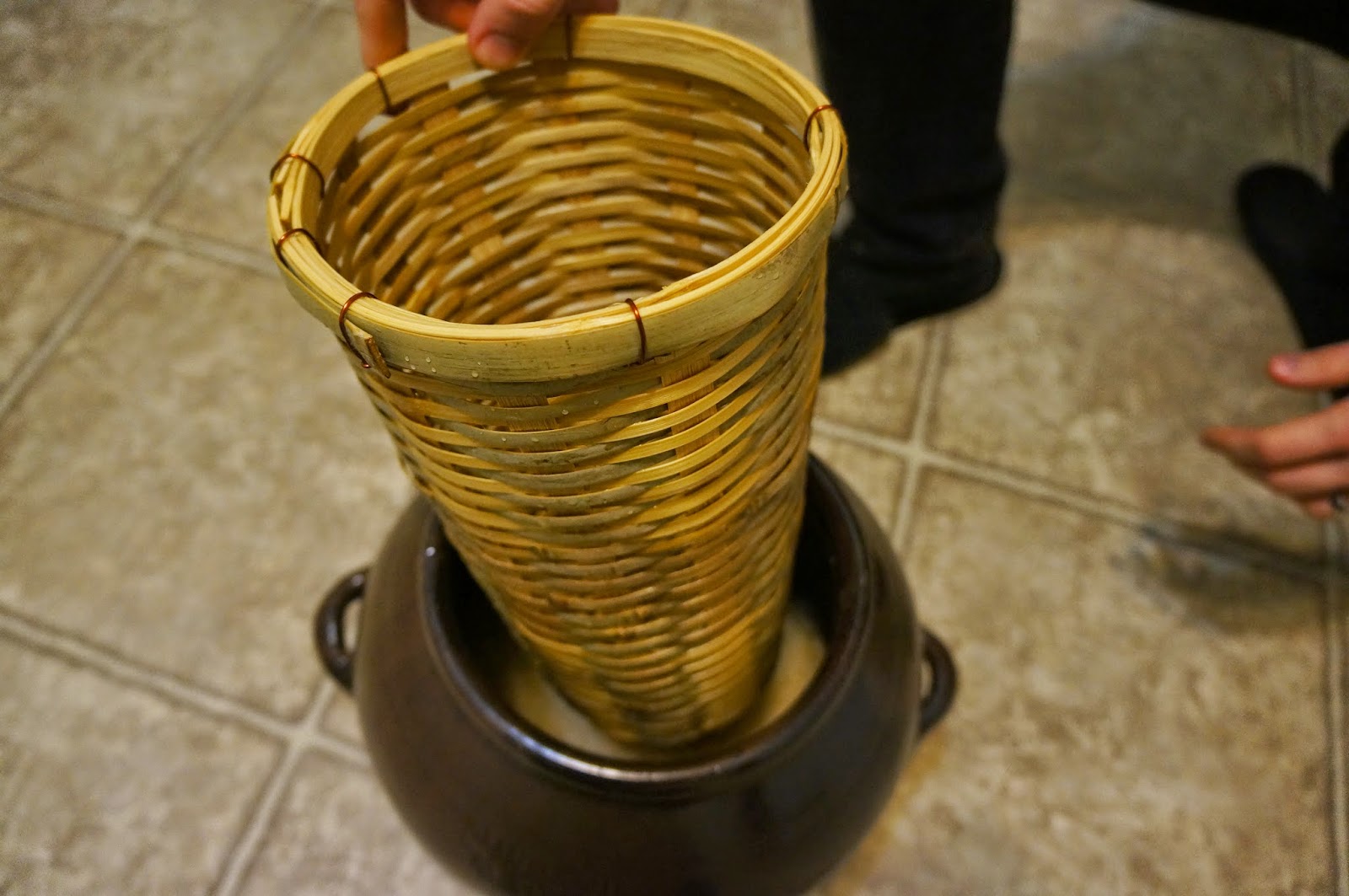
Last time I hinted at brewing for my daughter's first birthday party. That was the intention, but due to the cold weather or slow acting yeast the makgeolli wasn't ready for another week! To make it interesting I decided to try using the Yongsu (용수) for the first time. A yongsu is a woven basket shaped like a cone, with a rounded end instead of a point. The yongsu is placed directly inside a hangari to separate the rice and nuruk from the completed makgeolli or dong-dong ju.  The benefit of the yongsu is that you can scoop out the makgeolli for serving without having to pour out the entire hangari. This eliminates the need to filter in advance, which can be very convenient if you have a large jug of makgeolli. The downside of the yongsu is that any sweetening or flavor must be done separately, which introduces another step. Also, it is quite difficult to clean. To summarize, the yongsu offers the ability to serve makgeolli quickly and unaltered without much e...

First brew in the new hangari

Image
On Sunday I started a fresh brew in the new hangari. What's a hangari? You can find out the basics in my last post here . Ingredients I am continuing to use the following ratio, which was taken from the book Making, Drinking, and Enjoying Makgeolli.  If you are interested in the brand of rice, type of water, nuruk, etc. please leave a comment below and I'll be happy to provide more details. For sweetening, honey and brown rice syrup are used. Process The brew started by preparing the rice. The rice was washed by running water over the rice while swooshing it around in a metal colander. A pot was placed under the rice to  periodically check the color of the water running through the rice. When the water was mostly clear the rice was moved to a clean pot, which was filled with enough water to cover the rice. The uncooked rice soaked overnight. In the morning the rice was drained and steamed in a deep pot with a steamer basket. I have a cheesecloth that I use for...

New Hangari

Image
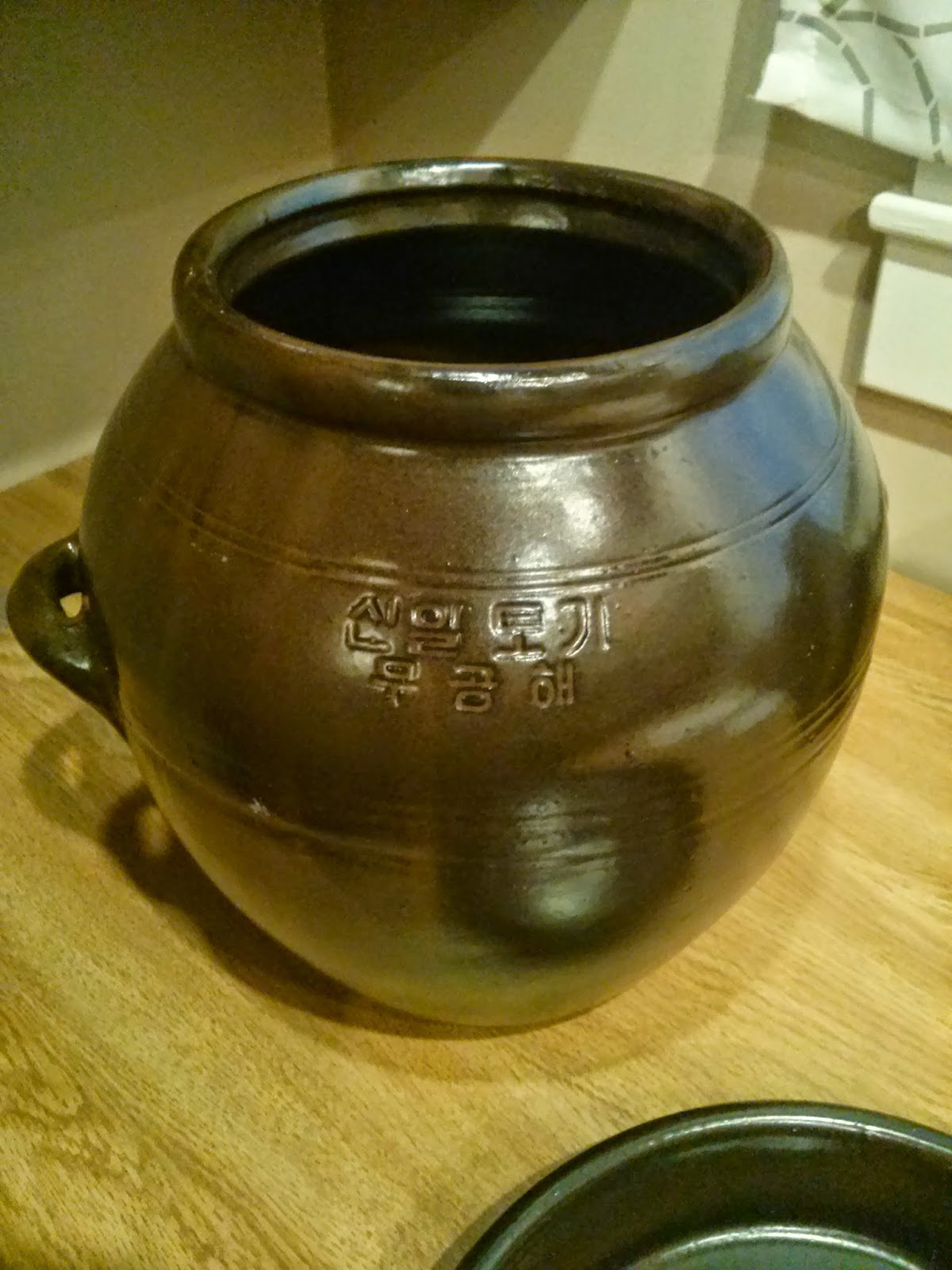
Great news! I got a new hangari! What's a hangari? (항아리) Hangari is the clay jar traditionally used to ferment all kinds of foods or beverages in Korean cuisine. These are the big brown jugs that house kimchi, rice wine, and medicinal extracts. They come in various shapes and sizes, but they are usually made with clay and have a characteristic brown glaze. They are heavy, cumbersome objects, but they represent a traditional way of brewing makgeolli that I must explore. I used a small hangari several times when brewing makgeolli in Korea. However, I've learned a lot since then and want to continue experimenting brewing using hangari. Hangari may also be called onggi. Below I'll give a quick summary of the pros and cons of using a hangari, as well as a few methods used to prepare hangari for brewing. This content was originally found in Jeontongju that You Can Easily Make at Home  by Lee SeokJun ( 전통주 집에서 쉽게 만들기, 이석준  ). It has been translated from the original text b...